
Music & Teaching
Educational Philosophy
It is my belief that music—at its simplest—is a tool used for building both a world of complete artistic immersion, and separately, a world where kinesthetic communication is valued over [direct] verbal communication.
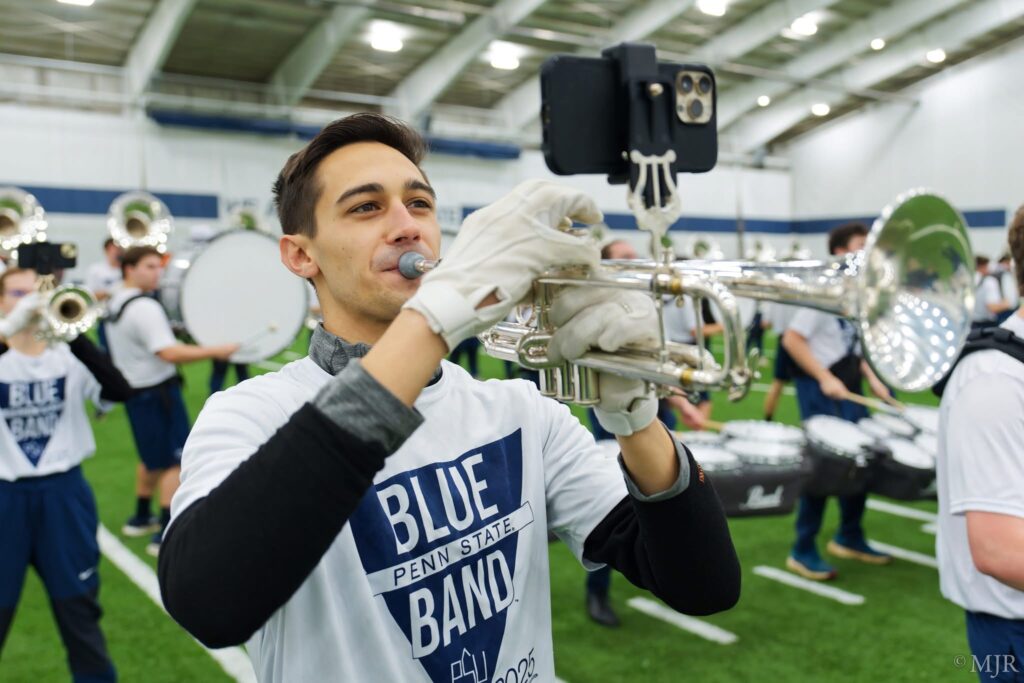
To best utilize music in this way means isolating the parts that make up both of these worlds. In a structured setting, this would first be learning how to communicate as artists and use effective body language. The steps needed for developing and applying these clear communication skills towards the musical arts, however, come from a diverse range of fields such as psychology, linguistics, neuroscience, physiology, sociology, athletics, and so many more. In a broad effort to provide students with a complete and diverse experience in my classroom, I believe that finding musical ways to
include aspects of each and every single one of these fields is absolutely essential to a well-rounded musical education. In a more specific frame of mind, it has been a long-standing, provable fact that when given the chance to choose their level of involvement and display their level of interest through varied means and opportunities, students’ effort and achievement both grow. Because of this, I plan to facilitate an array of student leadership opportunities from sectional and small ensemble leaders to officers, project leaders, and more.
I believe that by teaching students to be vocal with their ideas and to take actionable steps towards claiming ownership of their learning process, we can nuture people to be more independent, capable, and artistic. When communication skills and artistry are able to flourish, the learning process becomes something that can be applied to anything, and in a time where opportunity is being robbed from us left and right, teaching kids to continuously create their own opportunities for creating is the only way to protect and extend the reach of artistic freedom and access to functional education.
Professional Resume
Tanner Deyo
Founder of EQ Arts LLC
